

Water Softeners
Stop scale before it builds up in your pipes, water heater, and fixtures.
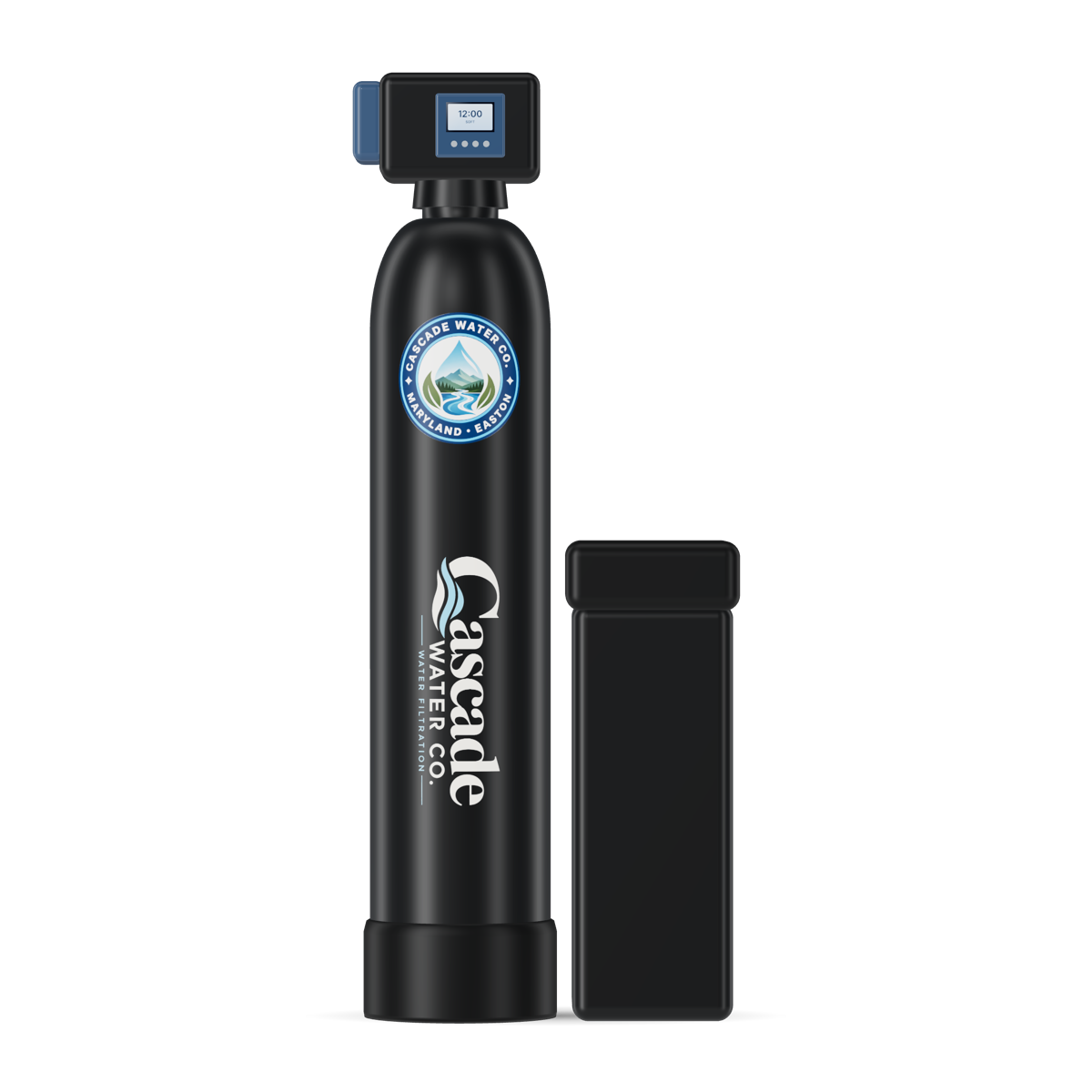
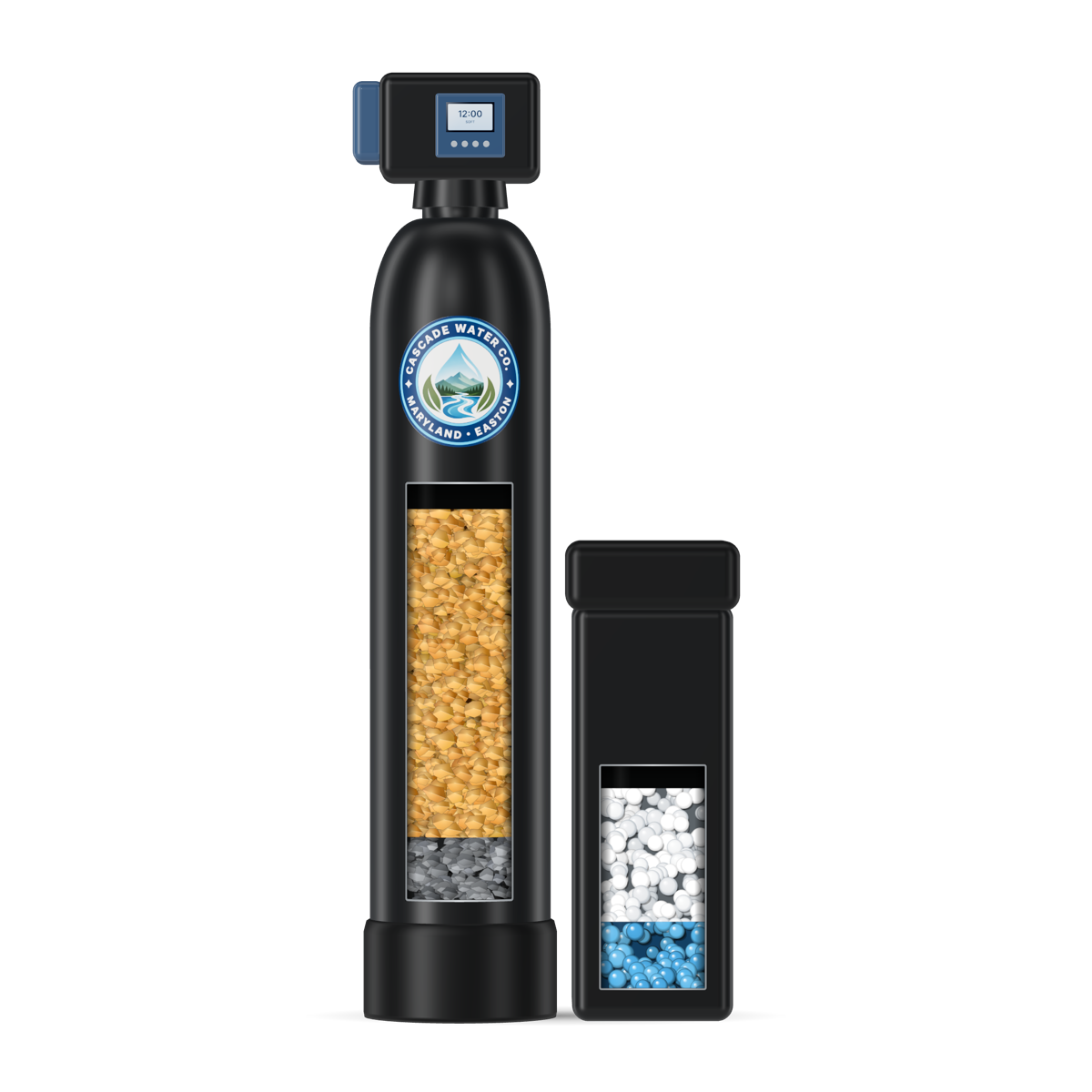
- Softening resin Beads that trade hardness minerals for sodium
- Gravel base Supports the resin bed
- Salt (brine tank) Recharges the resin automatically
- Brine Salty water used to rinse the resin
Step by step
A water softener treats all the water coming into your home to remove the calcium and magnesium that make water “hard.”
Hard water flows into the resin tank
Calcium and magnesium are the dissolved minerals that make water hard.
Resin beads trade minerals
Thousands of tiny resin beads hold onto calcium and magnesium and release sodium (or potassium) in their place. This is called ion exchange.
Soft water to your home
Softened water flows from the center tube to every tap, so scale stops building up.
Automatic regeneration
When the resin is full, the valve rinses it with salty brine from the salt tank. The brine recharges the beads and the hardness is flushed to the drain.
Best for
- White crust on faucets and spots on glasses and shower doors
- Protecting water heaters, dishwashers, and plumbing from scale
- Well water that tests hard, including small amounts of iron
Maintenance
Check the salt tank about once a month and top it up as needed. The resin itself lasts many years. We service the valve and clean the brine tank when needed.
Good to know: Softening adds a small amount of sodium to the water. If that’s a concern, an RO tap for drinking water or a potassium-based system can help.
What it can help reduce
Every system is matched to your water test. Each link opens our sourced guide to that contaminant.
How well any system works depends on the specific equipment, its certification (such as NSF/ANSI standards), your water chemistry, and maintenance. The information on this site is for general education only and is not medical advice. Talk with a qualified health professional about health concerns. Water treatment equipment performance depends on the system, its certification, and proper maintenance.
Questions people ask
Will my water taste salty?
No. Softening adds a small amount of sodium, roughly in proportion to how hard your water was, which isn’t enough to taste salty. If you watch your sodium, a reverse osmosis tap for drinking water removes most of it, or we can use potassium instead of salt.
Do I need a softener in Easton?
Maybe not. Easton Utilities’ latest report describes its water as soft (under 50 ppm hardness). Wells around the Shore vary a lot, which is why we test first.
Does a softener remove iron?
It can handle small amounts of dissolved iron. Higher iron levels need a dedicated iron filter in front of the softener.
Other systems
- Whole-Home FiltrationFiltered water at every tap and shower. Commonly used to reduce chlorine taste and odor.
- Reverse OsmosisA dedicated drinking-water tap that filters out a wide range of dissolved substances.
- RemineralizationAdds calcium and magnesium back after RO for a balanced, natural taste.
- UV DisinfectionUltraviolet light that inactivates bacteria and viruses without adding chemicals. Common for wells.
- Sediment & Pre-FiltrationCatches sand, rust, and grit before they reach your plumbing and other equipment.

Not sure if you need water softeners?
A free in-home water test tells us exactly what your water needs, and what it doesn’t.