

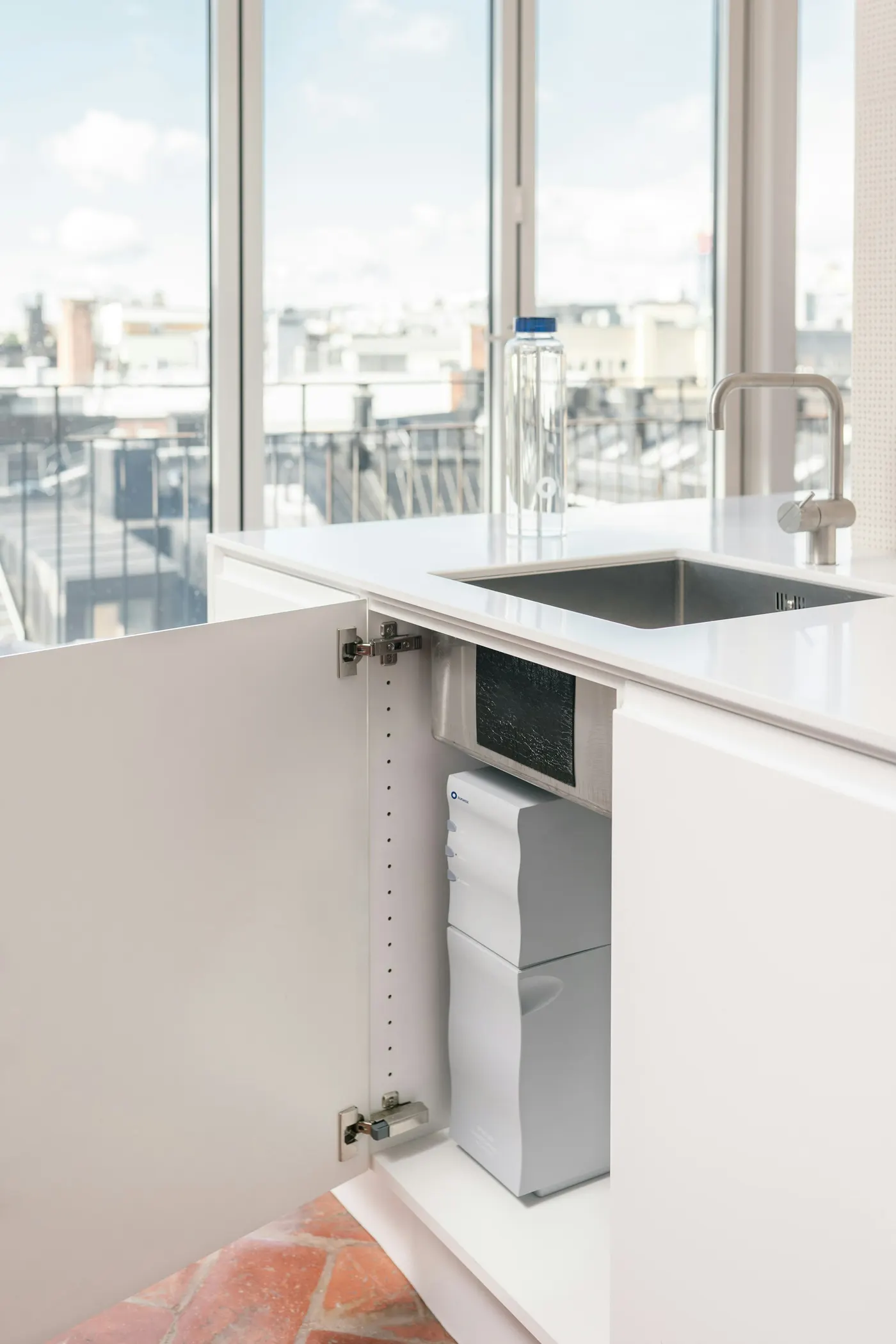
Reverse Osmosis
The most thorough drinking water filtration, right at your kitchen sink.
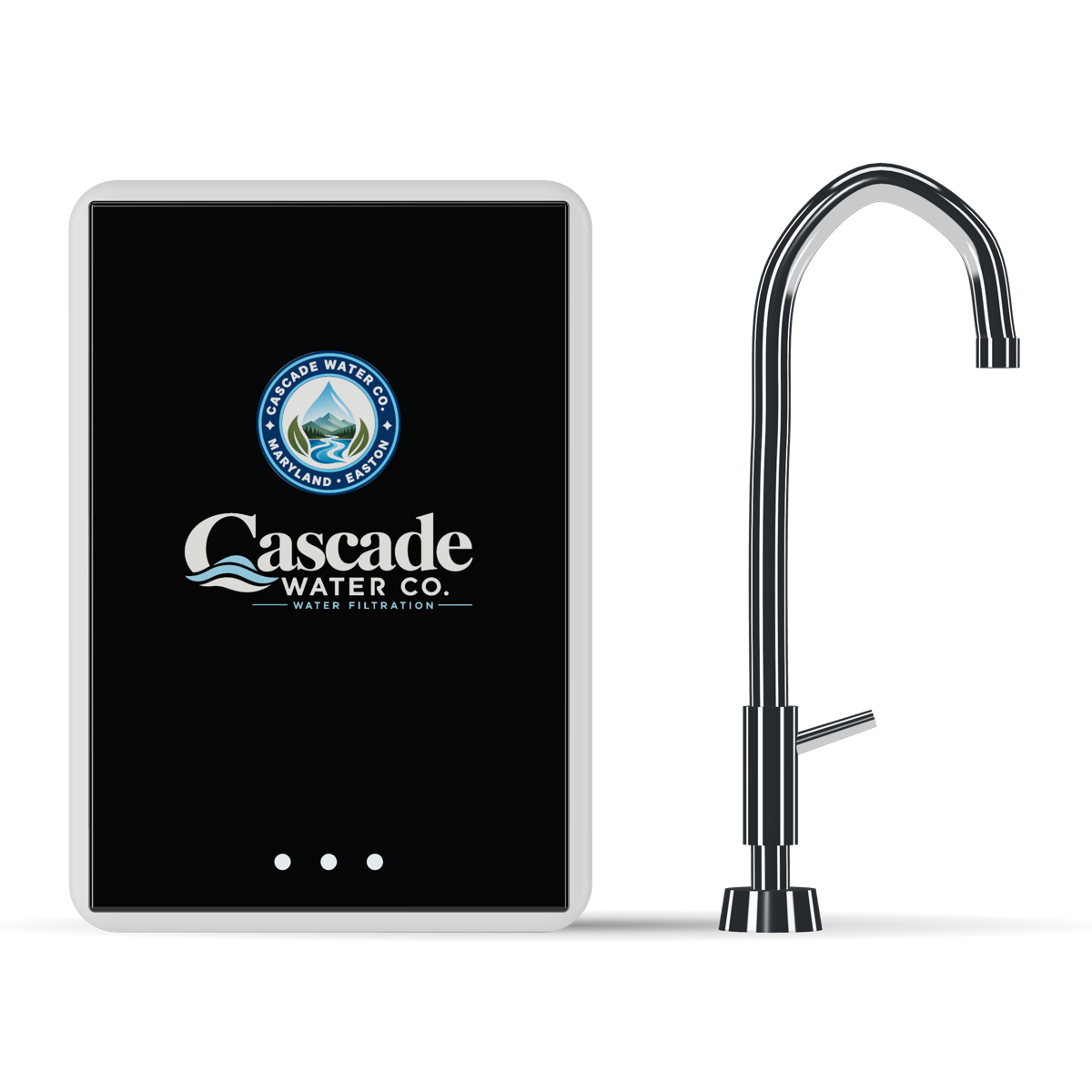
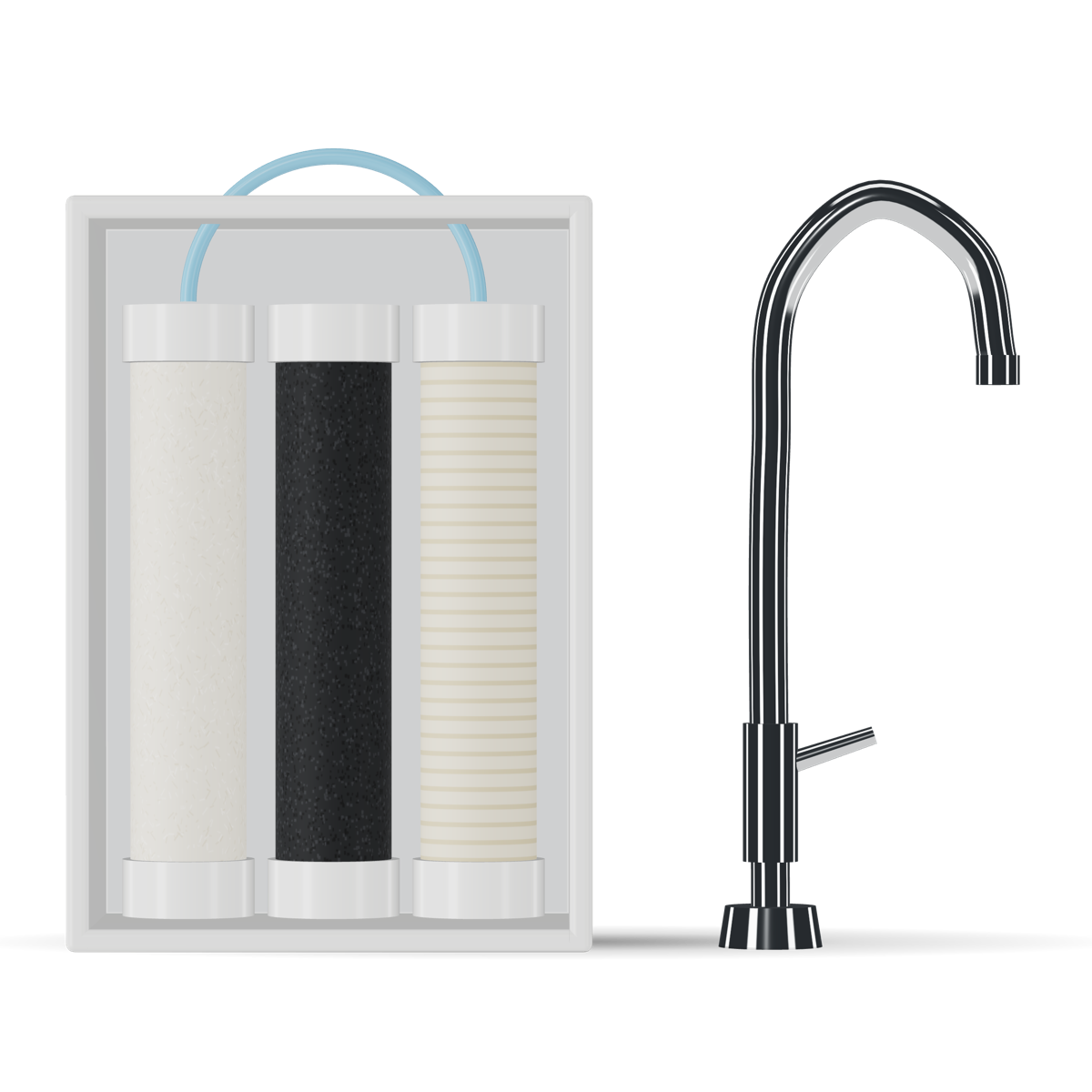
- Sediment filter Catches sand, silt, and rust
- Carbon block Reduces chlorine taste and odor
- RO membrane Holds back dissolved solids
Step by step
Reverse osmosis (RO) is usually installed under the kitchen sink with its own faucet, for drinking and cooking water.
Sediment pre-filter
Catches sand, silt, and rust first, so the finer stages don’t clog.
Carbon pre-filters
Reduce chlorine, which improves taste and protects the membrane, since chlorine can damage it.
RO membrane
Water pressure pushes water through a very fine membrane. Most dissolved solids can’t pass and are rinsed away to the drain.
Storage and your faucet
Filtered water is held in a small tank (or made on demand in tankless models), then passes a final polishing filter to its own faucet.
Best for
- Great-tasting water for drinking, cooking, coffee, and ice
- Dissolved contaminants like nitrate, arsenic, fluoride, lead, and PFAS (look for NSF/ANSI 58 certification)
- Private wells, or homes with a softener that want lower-sodium drinking water
Maintenance
Pre-filters are usually changed every 6 to 12 months and the membrane every few years, depending on your water. We’ll remind you when it’s time.
Good to know: RO also removes healthy minerals, so many people pair it with a remineralization stage. Membranes and filters are replaced periodically.
What it can help reduce
Every system is matched to your water test. Each link opens our sourced guide to that contaminant.
- Lead
- Copper
- Arsenic
- Barium
- Chromium
- Selenium
- Nickel
- Aluminum
- Zinc
- Lithium
- Manganese
- Sodium
- Potassium
- Chloride
- Sulfate
- Taste & odor compounds
- Chlorine
- Total Trihalomethanes
- Haloacetic Acids
- PFAS
- Nitrate
- Atrazine
- Simazine
- Ethylene dibromide
- Volatile organic compounds
- Asbestos
- Radium
- Gross alpha activity
- Beta/photon emitters
- Fluoride
How well any system works depends on the specific equipment, its certification (such as NSF/ANSI standards), your water chemistry, and maintenance. The information on this site is for general education only and is not medical advice. Talk with a qualified health professional about health concerns. Water treatment equipment performance depends on the system, its certification, and proper maintenance.
Questions people ask
Does reverse osmosis waste water?
RO sends some water to the drain to rinse the membrane. Newer, more efficient systems send much less. We’ll explain the ratio for any system we recommend.
Does it remove healthy minerals?
Yes, RO removes most minerals too. Many people add a remineralization stage that puts calcium and magnesium back for a balanced taste.
Can it filter my whole house?
RO is usually installed for drinking water at one or two taps. Whole-house RO exists for special cases, and we’ll tell you if your water needs it.
Other systems
- Whole-Home FiltrationFiltered water at every tap and shower. Commonly used to reduce chlorine taste and odor.
- Water SoftenersRemoves the hardness minerals that leave scale on fixtures, heaters, and appliances.
- RemineralizationAdds calcium and magnesium back after RO for a balanced, natural taste.
- UV DisinfectionUltraviolet light that inactivates bacteria and viruses without adding chemicals. Common for wells.
- Sediment & Pre-FiltrationCatches sand, rust, and grit before they reach your plumbing and other equipment.

Not sure if you need reverse osmosis?
A free in-home water test tells us exactly what your water needs, and what it doesn’t.