

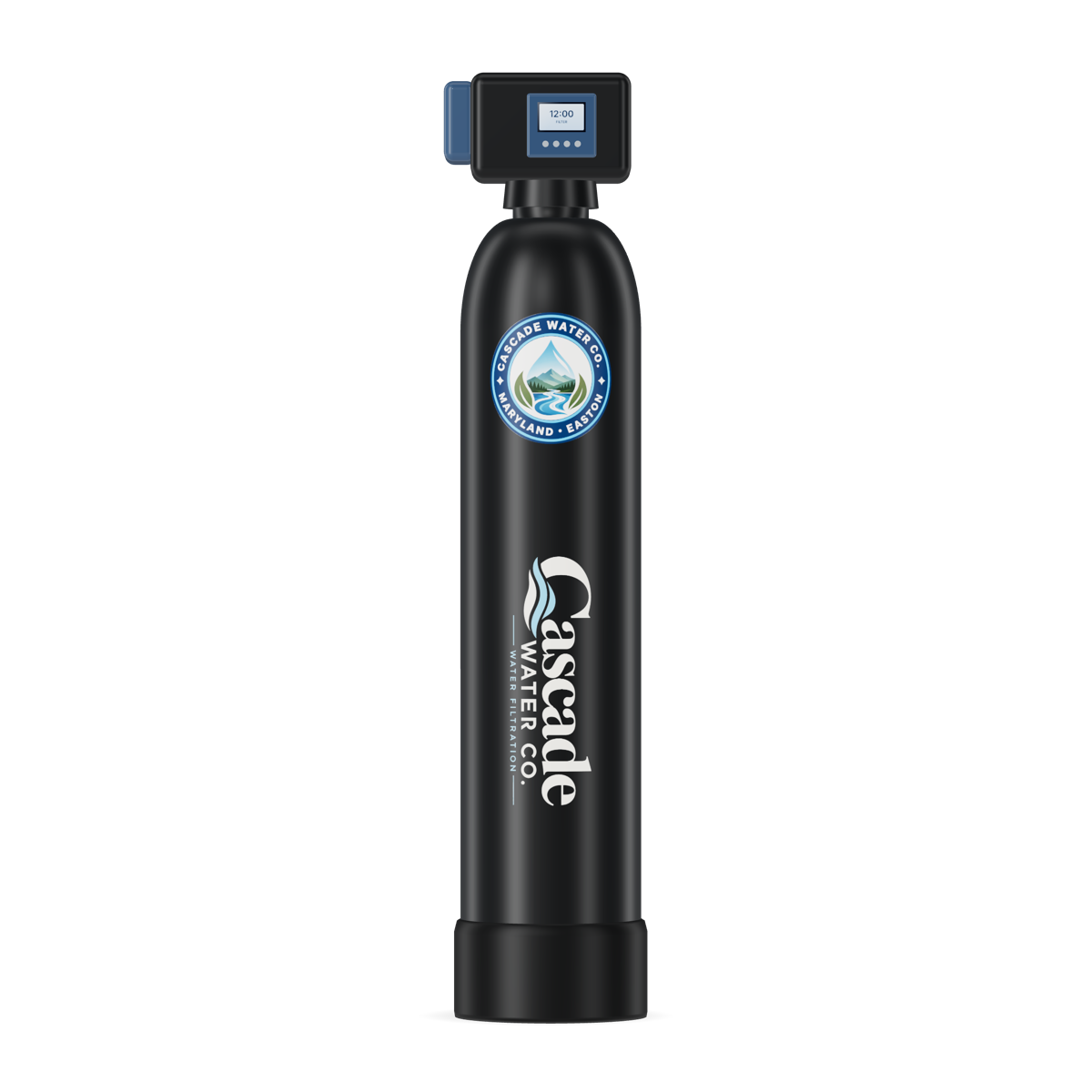
Whole-Home Filtration
Filtered water at every faucet, shower, and appliance.
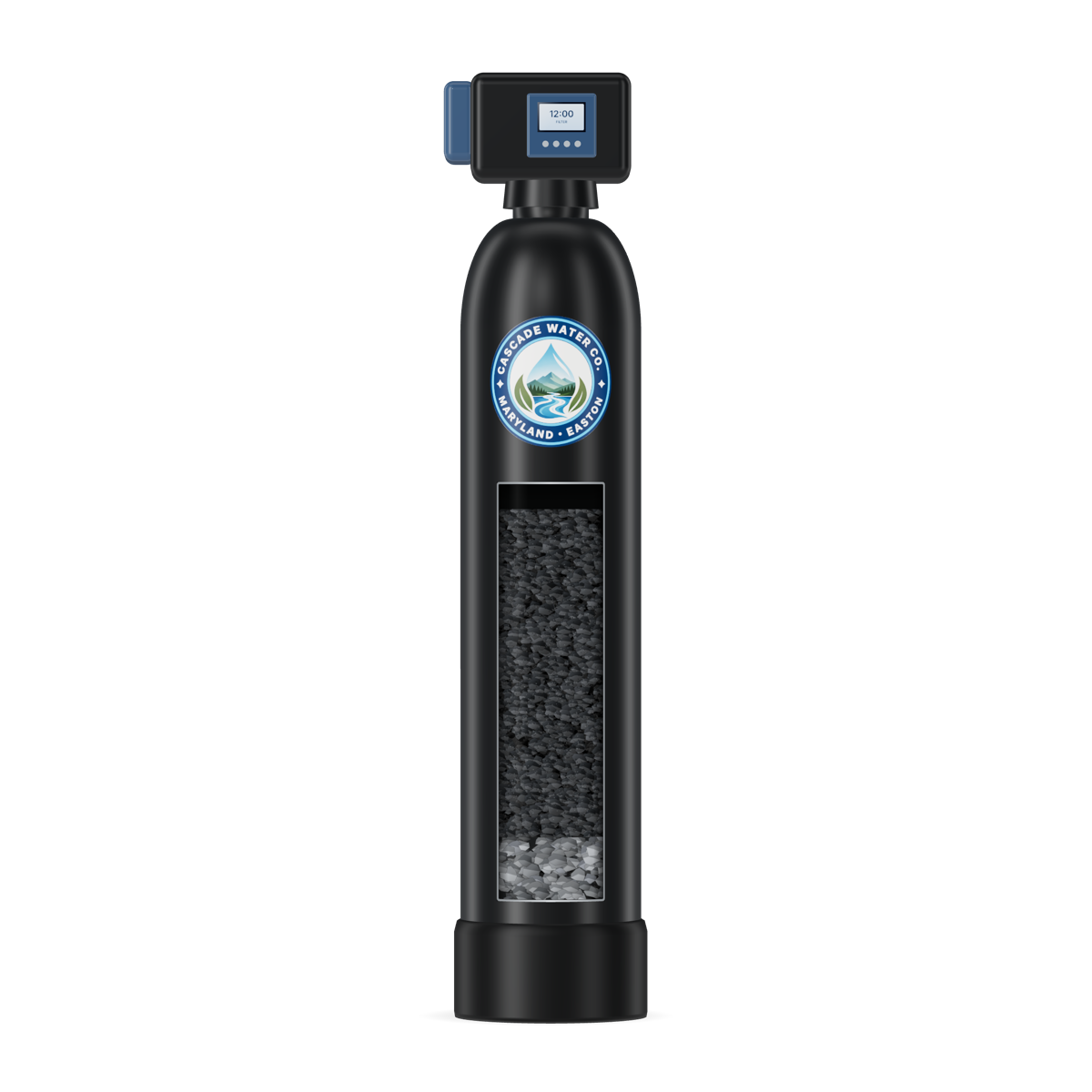
- Activated carbon Holds onto chlorine and many chemicals
- Gravel base Supports the carbon bed
Step by step
A whole-home (point-of-entry) filter is installed where water enters your home, so every faucet, shower, and appliance gets filtered water.
Water enters the control valve
All the water coming into your home is routed through the tank, so every tap gets filtered water.
Down through activated carbon
Carbon has an enormous internal surface area. Chlorine and many organic chemicals stick to it as water passes through, a process called adsorption.
Up the riser tube
Filtered water collects in the gravel base at the bottom and rises up the center tube back to the valve and out to your home.
Automatic backwash
On a schedule, the valve reverses the flow to rinse and loosen the media bed so it keeps flowing well.
Best for
- City water with a chlorine or chloramine taste and smell
- Filtered water for showers and laundry, not just drinking
- Reducing disinfection byproducts (TTHM and HAA5) your water system reports
Maintenance
Carbon media is replaced every few years, depending on how much water you use and how much chlorine is in it. Homes on chloramine need a catalytic carbon. We set a schedule based on your water.
Good to know: Filter media needs to be replaced on a schedule. We’ll tell you when, based on your water and usage.
What it can help reduce
Every system is matched to your water test. Each link opens our sourced guide to that contaminant.
- Lead
- Iron
- Manganese
- Taste & odor compounds
- Chlorine
- Total Trihalomethanes
- Haloacetic Acids
- PFAS
- Atrazine
- Simazine
- Ethylene dibromide
- Volatile organic compounds
- Radon
How well any system works depends on the specific equipment, its certification (such as NSF/ANSI standards), your water chemistry, and maintenance. The information on this site is for general education only and is not medical advice. Talk with a qualified health professional about health concerns. Water treatment equipment performance depends on the system, its certification, and proper maintenance.
Questions people ask
Will it lower my water pressure?
A properly sized system has very little effect on pressure. We size the tank and valve to your home’s peak water use.
Does it soften my water?
No. Carbon doesn’t remove hardness minerals. If your water is hard, it can be paired with a softener.
Does it remove everything?
No single filter does. Carbon is good at chlorine and many organic chemicals. Dissolved minerals, nitrate, and some metals need reverse osmosis or another treatment. Your water test tells us what to target.
Other systems
- Reverse OsmosisA dedicated drinking-water tap that filters out a wide range of dissolved substances.
- Water SoftenersRemoves the hardness minerals that leave scale on fixtures, heaters, and appliances.
- RemineralizationAdds calcium and magnesium back after RO for a balanced, natural taste.
- UV DisinfectionUltraviolet light that inactivates bacteria and viruses without adding chemicals. Common for wells.
- Sediment & Pre-FiltrationCatches sand, rust, and grit before they reach your plumbing and other equipment.

Not sure if you need whole-home filtration?
A free in-home water test tells us exactly what your water needs, and what it doesn’t.