

What's in the water in St. Michaels?
If your home in St. Michaels is on public water, it most likely comes from Town of St. Michaels. Below is everything it reported in its latest published water quality report.
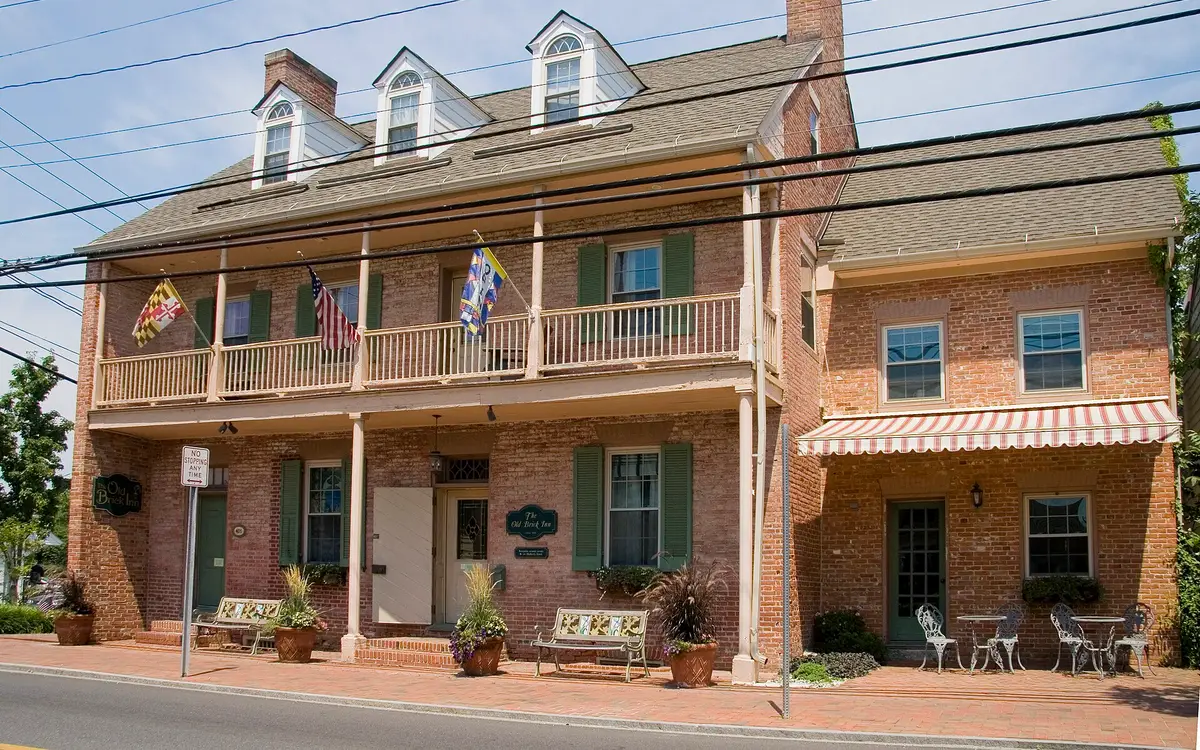
Is this your water? Homes outside the town's water service area in 21663 may use private wells. Check your water bill to confirm your provider.
Talbot · Public water system
Town of St. Michaels
LeadMetals1.8 ppb15 ppbAction level2023–2025
Your body
EPA has set a health goal of zero for lead because no safe level of exposure is known. In children, low-level lead exposure has been linked to lower IQ, learning and attention problems; in adults, to raised blood pressure and kidney effects. Pregnant women and young children are most at risk.
Your home & appliances
Lead itself does not damage plumbing, but its presence is a sign of corrosion: water chemistry that dissolves metal from pipes, solder, and fixtures.
What it is
A metal that usually gets into tap water from lead service lines, lead solder, and older brass fixtures inside buildings, not from the water source itself. Homes built before 1986 are more likely to have lead plumbing.
Exactly as reported
- Lead (distribution): 1.8 ppb (90th percentile) · range <0.005 · Action level 15 · health goal 0 · violation: N · sampled 2023–2025
ArsenicMetals11.1 ppb10 ppbMCL2025
Your body
Long-term exposure has been linked to skin changes, circulatory problems, and an increased risk of bladder, lung, and skin cancers (EPA, WHO). EPA’s health goal is zero.
Your home & appliances
Arsenic at levels found in drinking water does not usually harm plumbing or appliances.
What it is
A naturally occurring element found in some rock and soil, and in past use in pesticides and wood preservatives. It has no taste, color, or smell. Some Maryland aquifers contain natural arsenic.
Exactly as reported
- Arsenic (quarterly): 11.1 ppb (highest running annual average) · range 0–11.1 · MCL 10 · health goal n/a · violation: N · sampled 2025Note: Shown exactly as printed. The report states the water meets EPA's arsenic standard. Contact the Town of St. Michaels with questions about this result.
- From the report: The report includes EPA's required notice for arsenic between 5 µg/L and the MCL. It says the water meets EPA's arsenic standard but does contain low levels of arsenic.
Total TrihalomethanesDisinfection byproducts20 ppb80 ppbMCL2025
Your body
According to EPA, long-term exposure above the federal limit has been linked to liver, kidney, or central nervous system problems and an increased risk of cancer. Studies have associated long-term exposure to chlorination byproducts with bladder cancer.
Your home & appliances
Trihalomethanes do not affect plumbing. They can also be inhaled during hot showers.
What it is
A group of four chemicals (chloroform, bromodichloromethane, dibromochloromethane, bromoform) that form when chlorine reacts with natural organic matter in water. Levels are usually higher at the far ends of a distribution system and in warm months.
Exactly as reported
- Trihalomethanes (TTHM) (Distribution): 20 ppb (highest lraa) · range 20–20 · MCL 80 · health goal 0 · violation: N · sampled 2025
Haloacetic AcidsDisinfection byproducts3 ppm4 ppmMCL2025
Your body
According to EPA, long-term exposure above the federal limit has been linked to an increased risk of cancer.
Your home & appliances
Haloacetic acids do not affect plumbing.
What it is
Five related chemicals that form when chlorine reacts with natural organic matter in water. Like TTHM, they are tracked at points around the distribution system.
Exactly as reported
- Haloacetic Acids (HAA5) (Distribution): 3 ppm (highest lraa) · range 3.3–3.3 · MCL 4 · health goal 4 · violation: N · sampled 2025Note: The report prints ppm and 4/4 for this row. The federal MCL for HAA5 is 60 ppb (EPA).
Beta/photon emittersRadiological11.4 pCi/L50 pCi/LMCL2025
Your body
According to EPA, long-term exposure above the federal limit has been linked to an increased risk of cancer.
Your home & appliances
Beta emitters do not affect plumbing.
What it is
A screening measurement of beta radiation in water, from natural minerals (like potassium-40) and some human-made sources. Water systems compare results to a 50 pCi/L screening level.
Exactly as reported
- Gross Beta Particle activity: 11.4 pCi/L (highest value) · range 9.5–11.4 · MCL 50 · health goal 0 · violation: N · sampled 2025
CopperMetals0.0383 ppm1.3 ppmAction level2023–2025
Your body
According to EPA, short-term exposure above the action level has been linked to stomach and intestinal upset. Long-term exposure has been linked to liver or kidney damage, and people with Wilson’s disease are more sensitive.
Your home & appliances
Copper in water points to pipe corrosion, which can lead to pinhole leaks over time. It also leaves blue-green stains on sinks, tubs, and fixtures.
What it is
A metal that mostly enters tap water from corrosion of copper pipes and brass fixtures, especially when water is acidic (low pH) or sits in pipes for hours.
Exactly as reported
- Copper (distribution): 0.0383 ppm (90th percentile) · range <0.005 · Action level 1.3 · health goal 1.3 · violation: N · sampled 2023–2025
FluorideMinerals0.7 ppm4 ppmMCL2025
Your body
EPA sets an enforceable limit of 4.0 mg/L and a secondary standard of 2.0 mg/L. According to EPA, long-term exposure above 4.0 mg/L has been linked to bone disease, and children exposed above 2.0 mg/L may develop dental fluorosis (tooth discoloration or pitting). A 2024 federal NTP review examined fluoride exposure above 1.5 mg/L and children’s IQ.
Your home & appliances
Fluoride does not affect plumbing.
What it is
A mineral that occurs naturally in some groundwater and that many public water systems add at low levels to help prevent tooth decay.
Exactly as reported
- Fluoride: 0.7 ppm (highest level detected) · range 0.7–0.7 · MCL 4 · health goal 4 · violation: N · sampled 2025
ChlorineDisinfectants0.6 ppm4 ppmMax. disinfectant2025
Your body
According to EPA, people drinking water containing chlorine well in excess of the federal limit could experience eye or nose irritation or stomach discomfort. Disinfection itself is an important public health protection.
Your home & appliances
Chlorine causes the “pool” taste and smell many people notice. Over time it can dry out rubber seals and gaskets in fixtures and appliances.
What it is
Public water systems are required to disinfect water to control germs, and most use chlorine or chloramine. A small amount stays in the water all the way to your tap.
Exactly as reported
- Chlorine: 0.6 ppm (highest level detected) · range 0.2–0.8 · Max. disinfectant 4 · health goal 4 · violation: N · sampled 2025
BariumMetals0.01537 ppm2 ppmMCL2025
Your body
According to EPA, long-term exposure above the federal limit has been linked to increased blood pressure.
Your home & appliances
Barium can add to the mineral scale that builds up in water heaters and pipes.
What it is
A naturally occurring metal found in many rock formations, plus discharges from drilling and metal refining.
Exactly as reported
- Barium: 0.01537 ppm (highest level detected) · range 0.01537–0.01537 · MCL 2 · health goal 2 · violation: N · sampled 2025
ChromiumMetals1.6 ppb100 ppbMCL2025
Your body
According to EPA, long-term exposure above the federal limit has been linked to allergic dermatitis. Chromium-6 is the more toxic form and is under ongoing EPA review.
Your home & appliances
At drinking-water levels, chromium does not usually affect plumbing or appliances.
What it is
A metal found naturally in rocks and soil and released by steel, pulp, and other industries. Water reports usually list “total chromium,” which includes chromium-3 and chromium-6.
Exactly as reported
- Chromium: 1.6 ppb (highest level detected) · range 1.6–1.6 · MCL 100 · health goal 100 · violation: N · sampled 2025
SeleniumMetals1.4 ppb50 ppbMCL2025
Your body
According to EPA, long-term exposure well above the federal limit has been linked to hair or fingernail loss, numbness in fingers or toes, and circulatory problems.
Your home & appliances
Selenium at drinking-water levels does not usually affect plumbing.
What it is
A naturally occurring element. In small amounts it is a nutrient; it also comes from petroleum and metal refining and mining.
Exactly as reported
- Selenium: 1.4 ppb (highest level detected) · range 1.4–1.4 · MCL 50 · health goal 0 · violation: N · sampled 2025
Ethylene dibromideIndustrial & farm chemicals10 ppt50 pptMCL2021
Your body
According to EPA, long-term exposure above the federal limit has been linked to liver, stomach, reproductive, or kidney problems and an increased risk of cancer.
Your home & appliances
EDB does not affect plumbing.
What it is
A chemical once used as a gasoline additive and soil fumigant. It can linger in groundwater for decades.
Exactly as reported
- Ethylene dibromide: 10 ppt (highest level detected) · range 10–10 · MCL 50 · health goal 0 · violation: N · sampled 2021
Source: Town of St. Michaels, Annual Drinking Water Quality Report for 2025 (published 2026, covering 2025), via the Maryland Department of the Environment. Values appear as printed. Detected doesn't mean unsafe; most results are below federal limits.
Outside St. Michaels’s water system?
Private wells aren’t covered by public water rules, so no one tests them for you. These are what Maryland well owners most often test for:
Systems we install in St. Michaels
Other towns in Talbot County

Free water testing in St. Michaels
We come to you, test your water at the tap, and explain the results in plain language.